Wow.... I'm glad that there are people out there willing to rap about Math... It saves me trying to do all this work...
So relaxing... and it's about percents...
You're going to hate it... but just listen...
More fraction, decimals percent practice...
Tuesday, February 8, 2011


Monday, February 7, 2011
Power in the News
How can a country be powerful??
Complete the following statements...
° Political power is the ability to…
° Economic power is the ability to…
° Technological power is the ability to…
° A country with a well-educated population could…
° A well-armed nation could…
Quick review... What are the 4 forms of authority??
Give me an example using the recent uprising in Egypt as examples.
What are the benefits of authority? Obviously there are benefits of authority ... What about when authority is abused?
What's the CANADIAN CONNECTION TO HUMAN RIGHTS... A CANADIAN WROTE THEM way back in 1947... Our very own
It's from Historica Minutes
EXTENTION
OTHER CANADIANS WHO CARED ABOUT RIGHTS... CHECK OUT HISTORICA MINUTES (SEE THE LINK ABOVE AND SEARCH THESE PEOPLE...)
or what about
Complete the following statements...
° Political power is the ability to…
° Economic power is the ability to…
° Technological power is the ability to…
° A country with a well-educated population could…
° A well-armed nation could…
Quick review... What are the 4 forms of authority??
Give me an example using the recent uprising in Egypt as examples.
What are the benefits of authority? Obviously there are benefits of authority ... What about when authority is abused?
Authority protects our rights:
· Authority can be used to provide order and security in people's lives (e.g., air traffic controllers prevent accidents and provide safety for airplane passengers).
· Authority can be used to protect important rights and freedoms (e.g., the Charter of Rights and Freedoms).
· Authority can be used to ensure that benefits (advantages) and burdens (disadvantages) will be distributed fairly (e.g., laws ensure that all children have an opportunity to receive a free public education; parents' rules may require each of their children to help with household chores).
In Egypt there could be a possible transition of authority or change of government... Especially evident when there is a government leader who has been in charge for 30 years... Do you think that the change will be different? Now think about Southern Sudan where Cpl. Karen Hamelin (UN peacekeeper) is stationed. The country recently had a referendum or a vote by the people to decide if they should separate from Northern Sudan. This too is quite a change...
So now imagine...
- You wake up one morning and found there was no longer any authority. All rules, laws, police, courts, teachers, principals and government had disappeared.
- What problems might arise?
- How would they protect their rights?
- Would they even have any rights?
- So what's the purpose record of authority in society?
- to provide order and security - What are some examples that you know of that show this?
- to protect important rights and freedoms - What are some examples that demonstrate this?
- to ensure that the benefits and burdens are distributed fairly - What are some examples of this?
- Authority is expressed through formally installed agents and institutions (e.g., schools, teachers, police, health care system, justice system).
Now back to Egypt and Southern Sudan.... Let's make the connection of what we are studying in our unit to current events and demonstrations of power... RIGHT NOW!
- So what's happening in Egypt?? Imagine Mubarak steps down now.... What are the problems that a lack of authority creates? What could happen? What would have to be set up, to ensure that basic rights are preserved?
- Thinking about Egypt and Southern Sudan... How can authority be used to deal with issues in these countries? One country a peaceful transition to new government... the other revolutionary uprising...
- BLOG YOUR THOUGHTS ON KIDBLOG...
So now let's make the connection to closer to home...
How does authority protect each of us? Why do we need various forms of authority in our lives? What responsibilities do we have to authority or authority figures? Why is this?
For every RIGHT that we have there is a corresponding RESPONSIBILITY... Why is that? Look at the Education Act.... Canadian Charter of Rights and Freedoms... or United Nations Rights of Children...
Canadian Charter of Rights and Freedoms link.... just take a look... it's full of legal language but the document that protects our rights in Canada!
http://laws.justice.gc.ca/en/charter/1.html#anchorbo-ga:l_I
http://www.mapleleafweb.com/features/canadian-charter-rights-and-freedoms-introduction-charter-rights#overview
Here's a summarized version easier to understand...
http://encyclopedia.kids.net.au/page/ca/Canadian_Charter_of_Rights_and_Freedoms
http://www.unicef.org/voy/explore/rights/explore_rights.php
What's the CANADIAN CONNECTION TO HUMAN RIGHTS... A CANADIAN WROTE THEM way back in 1947... Our very own
J
ohn Humphrey.... see we have a long history of caring about the rights of others!
Check out the following link... http://www.histori.ca/minutes/minute.do?id=10219
It's from Historica Minutes
EXTENTION
OTHER CANADIANS WHO CARED ABOUT RIGHTS... CHECK OUT HISTORICA MINUTES (SEE THE LINK ABOVE AND SEARCH THESE PEOPLE...)
or what about
Agnes Macphail... another Canadian Champion for Human Rights who was Canada's First Woman Member of Parliament...
or
Nellie McClung who was responsible for getting the vote for women in Canada.
Tuesday, February 1, 2011
Egypt's Uprising
"Beautiful Video of Protests in Egypt"
The following video is really moving... even the music is haunting. For any of you who ever criticized that you were tired of thinking about human rights... or global issues.Watch this video...it really puts everything into perspective and makes us think about why we should care about government and rights...
One quote from the video that really sticks with me is a man yelling."And we will have our rights, one way or another!"
Thursday, January 13, 2011
Writing an Essay for City of Ember
1. Read the task carefully, underline key words (Still choosing your task?? Go to The City of Ember Post assignment page of this blog)
2. Create a Brainstorm or a web, referring back to the task given to you. Add as many details or "branches" as you can to the web, this will help you! These details will include comments, observations, specific examples from the novel.
3. Organize and Outline...
You can do this using an essay graphic organizer provided to you in class... OR...
Check out the following links from the READWRITETHINK website....
"Note taker site"
http://interactives.mped.org/view_interactive.aspx?id=722&title=
"Persuasive Writing Site"
http://www.readwritethink.org/files/resources/interactives/persuasion_map/
Tuesday, January 4, 2011
2010 in the News
Welcome back grade 7/8 to a new year... Happy New Year!
With the start of a new year, it's always important to look back and reflect on the events of the previous year... but rather than just read articles (which is fun, and I know you look forward to these kinds of tasks), we are going to explore the new year in other mediums...
Editorial cartoons and photos!
In class on Wednesday we will be exploring some key news events of 2010 through editorial cartoons... (these are most of them)


A Year in Canadian news - photo gallery
http://www.cbc.ca/photogallery/canada/4279/
Images for 2010 - photo gallery
Ivory Coast post election crisis
www.cbc.ca/world/story/2010/12/31/ivory-coast-un-uk.html
North Korea Threat of War - photo gallery and articles
http://www.cbc.ca/photogallery/world/4264/
The Rick Mercer Report.... He's always worth listening too... sometimes he's even funny....
http://www.cbc.ca/mercerreport/video.html
Events to start off the new year.... 2011
Flooding of "biblical proportions" in Australia
http://www.cbc.ca/world/story/2011/01/01/flooding-australia.html
With the start of a new year, it's always important to look back and reflect on the events of the previous year... but rather than just read articles (which is fun, and I know you look forward to these kinds of tasks), we are going to explore the new year in other mediums...
Editorial cartoons and photos!
In class on Wednesday we will be exploring some key news events of 2010 through editorial cartoons... (these are most of them)
November - December 2010 - Climate Change Conference in Cancun
October 2010 - Trapped Chilean Miners
August 2010 - Devastating Floods in Pakistan
May 2010 - Reactions to Gulf Oil Spill
January - February - Haitian Earthquake and Vancouver 2010 Winter Olympics
Analyzing Political Cartoons Guide
Reference:
http://www.readwritethink.org/classroom-resources/lesson-plans/analyzing-purpose-meaning-political-794.html
http://www.lessonplanspage.com/SSCIPoliticalCartoons912.htm
PHOTO GALLERY - 2010 IN PICS...Reference:
http://www.readwritethink.org/classroom-resources/lesson-plans/analyzing-purpose-meaning-political-794.html
http://www.lessonplanspage.com/SSCIPoliticalCartoons912.htm
| Symbolism | Cartoonists use simple objects, or symbols, to stand for larger concepts or ideas. After you identify the symbols in a cartoon, think about what the cartoonist intends each symbol to stand for. |
|---|---|
| Exaggeration | Sometimes cartoonists overdo, orexaggerate, the physical characteristics of people or things in order to make a point. When you study a cartoon, look for any characteristics that seem overdone or overblown. (Facial characteristics and clothing are some of the most commonly exaggerated characteristics.) Then, try to decide what point the cartoonist was trying to make through exaggeration. |
| Labeling | Cartoonists often label objects or people to make it clear exactly what they stand for. Watch out for the different labels that appear in a cartoon, and ask yourself why the cartoonist chose to label that particular person or object. Does the label make the meaning of the object more clear? |
| Analogy | An analogy is a comparison between two unlike things that share some characteristics. By comparing a complex issue or situation with a more familiar one, cartoonists can help their readers see it in a different light. After you’ve studied a cartoon for a while, try to decide what the cartoon’s main analogy is. What two situations does the cartoon compare? Once you understand the main analogy, decide if this comparison makes the cartoonist’s point more clear to you. |
| Irony | Irony is the difference between the ways things are and the way things should be, or the way things are expected to be. Cartoonists often use irony to express their opinion on an issue. When you look at a cartoon, see if you can find any irony in the situation the cartoon depicts. If you can, think about what point the irony might be intended to emphasize. Does the irony help the cartoonist express his or her opinion more effectively? |
Once you’ve identified the persuasive techniques that the cartoonist used, ask yourself:
- What issue is this political cartoon about?
- What is the cartoonist’s opinion on this issue?
- What other opinion can you imagine another person having on this issue?
- Did you find this cartoon persuasive? Why or why not?
- What other techniques could the cartoonist have used to make this cartoon more persuasive?What is the event or issue about that inspired the cartoon?
- Are there any real people in the cartoon? Who is portrayed in the cartoon?
- Are there symbols in the cartoon? What are they and what do they represent?
- What are some of the symbols and icons you believe are common in political cartoon? (7 minutes)
- What is the event or issue about that inspired the cartoon?
- Are there any real people in the cartoon? Who is portrayed in the cartoon?
- Are there symbols in the cartoon? What are they and what do they represent?
- What are some of the symbols and icons you believe are common in political cartoon? (7 minutes)
*** Questions given in class are slightly different than what is listed above (note that some questions are similar)
A Year in Canadian news - photo gallery
http://www.cbc.ca/photogallery/canada/4279/
Images for 2010 - photo gallery
Ivory Coast post election crisis
www.cbc.ca/world/story/2010/12/31/ivory-coast-un-uk.html
North Korea Threat of War - photo gallery and articles
http://www.cbc.ca/photogallery/world/4264/
The Rick Mercer Report.... He's always worth listening too... sometimes he's even funny....
http://www.cbc.ca/mercerreport/video.html
Events to start off the new year.... 2011
Flooding of "biblical proportions" in Australia
http://www.cbc.ca/world/story/2011/01/01/flooding-australia.html
Social sites government unit
http://schools.nycenet.edu/region4/gchs/rocco/Global%20Studies/index.htm
http://schools.nycenet.edu/region4/gchs/rocco/Global%20Studies/Global%201%20and%202/H1-Complete/Unit%2001%20-%20Social%20Studies%20Skills%20%5BSeptember%5D/07%20-%20Political%20Cartoons/07%20-%20Political%20Cartoons.pdf
http://schools.nycenet.edu/region4/gchs/rocco/Global%20Studies/Global%201%20and%202/H1-Complete/Unit%2001%20-%20Social%20Studies%20Skills%20%5BSeptember%5D/01-%20Maps/01-Maps.ppt
http://schools.nycenet.edu/region4/gchs/rocco/Global%20Studies/unit%201.htm
Why gov needed
http://ofcn.org/cyber.serv/academy/ace/soc/cecsst/cecsst034.html
Gov formation
http://ofcn.org/cyber.serv/academy/ace/soc/cecsst/cecsst216.html
Comparative gov
http://www.econedlink.org/lessons/index.php?lid=322&type=afterschool
Types of gov ppt
http://classroom.jc-schools.net/SS-units/presentations/gov-types.ppt
http://www.grafton.k12.wi.us/highschool/schill/government/chapter1/Classification%20of%20Governments_files/frame.htm
Handout types of gov
http://www.lessonsnips.com/docs/pdf/typesgovernment.pdf
Why do we need gov
http://schools.nycenet.edu/region4/gchs/rocco/Global%20Studies/Global%201%20and%202/H1-Complete/Unit%2001%20-%20Social%20Studies%20Skills%20[September]/03%20-%20Government/03-government.ppt
Tuesday, December 14, 2010
Social Test Outline
The test is based on the notes and handouts for the Location Unit given in class. All the notes were typed for the most part, so students can just refer to them. Students can also study assignments given in class. There is really no excuse for not being able to prepare, you were given everything you need...
For more review, you can even visit Brainpop... see the Good Websites page. The userid and passwords are there...
TEST DATE: Tuesday, December 21st.
Terms to know:
latitude
longitude
prime meridian
minutes and seconds
Time change, time zones (handout)
measuring distances using latitude/longitude (handout)
poles
equator
coordinates
different map projections - advantages and disadvantages
meridians
parallels
study the handouts on map projections, the 5 themes of geography (given last week) and the Earth's Grid System handout...
Questions we will focus on this week... You can start researching answers! This will also be on the test.
How does latitude impact climate? Start finding answers to the question. Where is it hottest? Where is it coldest? Why? Why is the equator so hot? You need to think about in relation to the sun?
What area of the world receives the same amount of daylight as darkness?
Why is it dark for 24 hours in the winter time in the arctic? Why is it the same during the summer months for the antarctic? When is there 24 hours of sunlight in the North? South?
Jesse Tree Assignment
Jesse Tree Ornament Instructions
To make the Jesse Tree ornaments you will need: glue; ribbon or yarn (preferably purple); and crayons, markers, paints or colored pencils, and cardboard stock to create paper background for the ornaments. The ornaments may be decorated with bits and pieces of bright colored paper, cloth, wood, plastic, etc., that you may find around your home or school. You will also need a Bible.
Step 1 - Read your Bible passage
Step 2 - Retell it in your own words.
Step 3 - Jot note the Who, What, Where, When, Why and How???? (if you can answer all of these) for the passage.
Step 4 - Write 15 "Gist" words - Sum up the passage in 15 key words...
Step 5 - Put this in your own words... written with proper grammar
Step 6 - Decide on an appropriate symbol, Sketch it...
Step 7 - Explain why this symbol fits your ancestor of Jesus and the passage from the Bible you were given
Step 8 - Finish off the symbol
Step 9 - On the front of the decoration - paste and decorate the symbol; on the back, place the summary of the passage (typed - you may have to type using 8 pt font.)
Decorations should be at least 12-15 cm diameters across...
DUE: FRIDAY, DECMEBER 16TH.
Abraham - Genesis 12.1-3
Sarah - Genesis 18.6-15
Moses - Exodus 34.27-28
Jacob - Genesis 28.10-22
Jesse - 1 Samuel 16.1-13
Jonah - Book of Jonah (it's short!)
Esther - Esther 2-5
Mary - Luke 1.26-33
Joseph - Luke 2.1-7
John the Baptist - Luke 1.5-25, 57-64, 80
Jesus - Matthew 1.1-17
Miriam - Exodus 15. 20-21
Ruth - Ruth 3.7-18
THE STORY OF THE JESSE TREE
Reference: CatholiccultureJesse was the father of the great King David of the Old Testament. He is often looked upon as the first person in the genealogy of Jesus.
http://www.catholicculture.org/culture/liturgicalyear/activities/view.cfm?id=545
In Church art a design developed showing the relationship of Jesus with Jesse and other biblical personages. This design showed a branched tree growing from a reclining figure of Jesse. The various branches had pictures of other Old and New Testament figures who were ancestors of Jesus. At the top of the tree were figures of Mary and Jesus. This design was used mostly in stained glass windows in some of the great medieval cathedrals of Europe. The Cathedral of Chartres (which was dedicated in 1260) has a particularly beautiful Jesse Tree window.
Another development in religious art during the Middle Ages was that of Mystery Plays--drama that depicted various Bible stories or lives of Saints and Martyrs. These plays were performed in churches as part of the liturgical celebrations. One such play was based on the Bible account of the fall of Adam and Eve. The "Tree of Life" used during the play was decorated with apples. (Quite possibly this is also the forerunner of our own Christmas tree.)
Combining the two ideas of the stained glass Jesse Tree window and the Tree of Life from the Mystery Play we come up with our Jesse Tree Advent project. This custom has been used for years to help Christians to prepare for Christmas.
Thursday, December 2, 2010
Wordle
Word Cloud http://www.wordle.net/
http://www.wordle.net/show/wrdl/2824294/Stewie%27s_Blog
Stewie's Class - Word Cloud
http://www.wordle.net/show/wrdl/2824307/Stew%27s_class
Taylor's Word Cloud
http://www.wordle.net/show/wrdl/2831402/Tay%27s_Favourites
http://www.wordle.net/show/wrdl/2824294/Stewie%27s_Blog
Stewie's Class - Word Cloud
http://www.wordle.net/show/wrdl/2824307/Stew%27s_class
Taylor's Word Cloud
http://www.wordle.net/show/wrdl/2831402/Tay%27s_Favourites
Thursday, November 25, 2010
The Giver and City of Ember
The City of Ember - Brief Summary of the Novel
In the underground city of Ember, young Lina and Doon struggle with clues in order to reveal both the history of their city and a way to save the population before their source of light dwindles away to nothing.
Jeanne DuPrau presents a colorless society with a bleak future in The City of Ember. The citizens of Ember live underground where they face daily blackouts, food shortages, and corrupt politicians. With the source of light waning, two young citizens take it upon themselves to unlock the secret to Ember’s mysterious past. Lina Mayfleet and Doon Harrow navigate this post-apocalyptic world in an attempt to decode a cryptic message that may save them all.
*Reference:http://www.randomhouse.com/teachers/catalog/display.pperl?isbn=9780375822742&view=tg
Pre-Reading Activities
Watch the video below:
http://video.yahoo.com/watch/4370185/11722947
The City of Ember Pre-Reading Activity:
Mock Assignment Day
Imagine that today is “Assignment Day” and each of you will get a job placement that will determine your future within the community. Mock job assignments will be distributed to you, and there will be a short talk about service to one’s community.
After Activity, think about...
-How did you feel about being assigned to a profession?
-What kind of world are we going to read about, where people are assigned jobs to work as messengers, laborers, electrician’s helpers, and supply clerks?
-What do these jobs show about the society of Ember?
-What do you predict the government is like?
During Novel Activities
Post - Reading Novel Activities
Thematic and Curricular Connections
Questions for Discussion and Essay Writing...
Grade 7's: Choose one of the writing activities listed below, be sure to fully explore all the questions given.
Grade 8's: Choose two of the writing activities listed below, again be sure to fully explore all the questions given.
Relationships Family and Friendship
Family - The main characters of the novel have nontraditional family structures. How do the main characters acclimate to their unconventional families in the towns of Ember and Sparks? How do their family relationships change from one book to the next? How does the absence of a mother affect both Doon and Lina? Both Doon and Lina are very responsible young people. How are their responsible dispositions related to their family roles?
Friendship–Lina and Doon share a friendship in the novel. Lina and Doon recognize positive and negative qualities in their friendships, a key aspect of accepting someone as your friend. What personality traits do they admire in one another? What qualities do they find troublesome in each other?
Write a multi paragraph essay that explores the relationships of family and friends in the novel.
The Effects of War– The novel is set in a post apocalyptic world. Ember is a last refuge for the human race (later if you read Sparks, it is a post-disaster society starting over.) Identify the lasting effects of war on both societies. What is the author’s message to readers? Imagine a world where technology and abundant resources no longer exist. How would their lives be altered? Explore all the ways that the lives of the citizens are different from our lives. Make connections to other societies in history or today that are impacted by war.
Greed–How does greed escalate to conflict? Trace incidents of greed by both townspeople and politicians throughout the novel. What is the ultimate message about greed in the novel? What is the author trying to say about corruption and power? Are the events of these novels a realistic reflection of human nature? Find an example in history or today, of how corruption and power can be destructive to a country or to an organization.
Community Leadership–In small groups, discuss the role of community leadership in The City of Ember and whether the leaders acted as good role models. Which characters provided true leadership for the town? Find an example of leaders in our society who act as role models for citizens. Show through examples how they are true leaders.
Art–Lina dreams of a world full of color and wonders what it might look like. She uses drawing as a way to express her dreams about faraway cities and unknown regions. She says that pictures can capture an idea or a place in ways language cannot. Sketch a place of a utopian society, like Lina does, and carefully select colors that reflect the mood and tone. Accompany your artwork with a one-page explanatory essay of your utopian city.
Language Arts–Write a magazine article for a travel magazine that describes either Ember as a travel destination. Cite lines from the novel's text that describe what it’s like to live in Ember. Use elements of descriptive language like imagery, simile, and metaphor in your writing.
Science– The novel hinges on dependence on electricity, even if it's a waning light source like in The City of Ember. Using the internet resources in this guide, research the fundamentals of electricity. How does it work? Who discovered it? What are the key scientific principles behind it? Explore the Watt’s on Your Mind Web site http://www.wattsnew.com/wattsnew3/castlegate/castlegate.html to learn about wasting electricity in our society.
Generators... visit: http://www.pbs.org/wgbh/amex/edison/sfeature/acdc.html
The idea of growing food and nurturing plants from seeds is paramount in this novel. Explore the benefits of growing food and buying local produce. Also, explore the benefits of composting as a means of creating a sustainable future. Besides growing their own food, how do the citizens reuse items? How do the citizens live sustainably? Why must they embrace this lifestyle for their existence?
http://www.nyu.edu/projects/mstep/lessons/howplants.html
http://www.kidsregen.org/educators/educators2.php?section=eduNga&ID=3#evaluating
http://www.sciencenetlinks.com/lessons.cfm?DocID=376
Social Studies and Geography–When the citizens of Ember escape their dark society for a more promising land, they became refugees. Define the word refugee and research the global refugee crisis. Where are the top 10 locations on the planet with the highest population of refugees? Choose one, and then write a three page report of that location’s current refugee situation as well as a brief history of its cause.
With your report, include map to pinpoint the 10 areas of the world with the most refugees: Afghanistan, Angola, Burma, Burundi, Congo-Kinshasa, Eritrea, Iraq, the Palestinian territories, Somalia, and Sudan. Why must refugees flee their homelands and why do some countries deny refugees access into their territories?
Economics–The principles of supply and demand dictate what resources are available in the town of Ember. As Lina says in The City of Ember, “You can’t divide a can of applesauce evenly among all the people in the city” (p. 153). Explore the concept of supply and demand; make a list of all the items in the novel that are in demand. Think about the creative ways in which the novel’s characters supply these items. How are the people of the novel experts on reusing things? What can we learn in our society from the lifestyle of the people of Ember? Write an essay that explores the questions above.
In the underground city of Ember, young Lina and Doon struggle with clues in order to reveal both the history of their city and a way to save the population before their source of light dwindles away to nothing.
Jeanne DuPrau presents a colorless society with a bleak future in The City of Ember. The citizens of Ember live underground where they face daily blackouts, food shortages, and corrupt politicians. With the source of light waning, two young citizens take it upon themselves to unlock the secret to Ember’s mysterious past. Lina Mayfleet and Doon Harrow navigate this post-apocalyptic world in an attempt to decode a cryptic message that may save them all.
*Reference:http://www.randomhouse.com/teachers/catalog/display.pperl?isbn=9780375822742&view=tg
Pre-Reading Activities
Watch the video below:
http://video.yahoo.com/watch/4370185/11722947
The City of Ember Pre-Reading Activity:
Mock Assignment Day
Imagine that today is “Assignment Day” and each of you will get a job placement that will determine your future within the community. Mock job assignments will be distributed to you, and there will be a short talk about service to one’s community.
After Activity, think about...
-How did you feel about being assigned to a profession?
-What kind of world are we going to read about, where people are assigned jobs to work as messengers, laborers, electrician’s helpers, and supply clerks?
-What do these jobs show about the society of Ember?
-What do you predict the government is like?
During Novel Activities
Post - Reading Novel Activities
Partner Poetry Assignment...
Partner Poems for Two Voices and the Theme of Community in
The City of Embers
Purpose: The purpose of this lesson is for you to examine life in your community and to compare/contrast it with life in the community created in The City of Embers. You are going to express your understanding of the contrast of the two communities by writing a poem for two voices. (To further understand the format for a poem with two voices, please refer to "Honeybees" or "Two Women" for more ideas).
Brainstorming:
1. Close your eyes and imagine being part of The City of Embers community. Imagine life in a city with the only source of light coming from light bulbs. Imagine most food coming from cans (with some produce being grown in greenhouses), your whole life is in a small town of under 500 people, no t.v.'s, no radios, no computers, no ipods and at twelve years old you are given your job assignment... and you start work. How would you feel about your daily life? What would life be like in this community? What would your goals be for the future? Keep in mind, you only know about this kind of life.
2. Share your brainstorm with people in your assigned group (provided by Ms. Steawart-Mitchell).
3. On a T- chart labeled, GIVER COMMUNITY and MY COMMUNITY; list characteristics for both communities and what life is like. Be sure to compare and contrast the two communities. Explore both the similarities and the differences.
Drafting the Poem for Two Voices:
Now start drafting a poem that shows two very different points of view. One point of view is life as a member of Ember the other a person living in Regina. You will write the poem with a partner and it must express the differences between the two communities. Some other ideas that you and partner can develop might be living in the community, family life, jobs, daily life, school or what's it's like being a particular age.
Here is an example. Examine the language and the form in the following lines.
*Notice that phrases on the same line are read together. Notice that colour is used to separate what is read separately. Lines in both colours are read together.
Living in my community...
I have many choices. I choose my job.
Families in my community
Can be two, three, four, or more people.
Living in my community. . . I have very few choices I am given an Assignment.
Families in my community
Are always small.
But we always can depend on our family... (said together in unison)
Display: Create a small poster for your poem (1/2 size of bristle board), that includes your poem typed attractively and 10 visuals that reflect the differences and the similarities of the two communities. Decorate with pencil crayon and other mediums that would be eye catching and would offer "texture" to your display (suggestions: glitter, string, yarn - reflects Ember, tinfoil... be creative with your ideas on how to represent your poem).
Presentation: Present your poem to the class. Try to develop the mood and the tone of the poem by adding costumes or props. But be sure to practice the tone and parts that are in unison.
Thematic and Curricular Connections
Questions for Discussion and Essay Writing...
Grade 7's: Choose one of the writing activities listed below, be sure to fully explore all the questions given.
Grade 8's: Choose two of the writing activities listed below, again be sure to fully explore all the questions given.
Relationships Family and Friendship
Family - The main characters of the novel have nontraditional family structures. How do the main characters acclimate to their unconventional families in the towns of Ember and Sparks? How do their family relationships change from one book to the next? How does the absence of a mother affect both Doon and Lina? Both Doon and Lina are very responsible young people. How are their responsible dispositions related to their family roles?
Friendship–Lina and Doon share a friendship in the novel. Lina and Doon recognize positive and negative qualities in their friendships, a key aspect of accepting someone as your friend. What personality traits do they admire in one another? What qualities do they find troublesome in each other?
Write a multi paragraph essay that explores the relationships of family and friends in the novel.
The Effects of War– The novel is set in a post apocalyptic world. Ember is a last refuge for the human race (later if you read Sparks, it is a post-disaster society starting over.) Identify the lasting effects of war on both societies. What is the author’s message to readers? Imagine a world where technology and abundant resources no longer exist. How would their lives be altered? Explore all the ways that the lives of the citizens are different from our lives. Make connections to other societies in history or today that are impacted by war.
Greed–How does greed escalate to conflict? Trace incidents of greed by both townspeople and politicians throughout the novel. What is the ultimate message about greed in the novel? What is the author trying to say about corruption and power? Are the events of these novels a realistic reflection of human nature? Find an example in history or today, of how corruption and power can be destructive to a country or to an organization.
Community Leadership–In small groups, discuss the role of community leadership in The City of Ember and whether the leaders acted as good role models. Which characters provided true leadership for the town? Find an example of leaders in our society who act as role models for citizens. Show through examples how they are true leaders.
Art–Lina dreams of a world full of color and wonders what it might look like. She uses drawing as a way to express her dreams about faraway cities and unknown regions. She says that pictures can capture an idea or a place in ways language cannot. Sketch a place of a utopian society, like Lina does, and carefully select colors that reflect the mood and tone. Accompany your artwork with a one-page explanatory essay of your utopian city.
Language Arts–Write a magazine article for a travel magazine that describes either Ember as a travel destination. Cite lines from the novel's text that describe what it’s like to live in Ember. Use elements of descriptive language like imagery, simile, and metaphor in your writing.
Science– The novel hinges on dependence on electricity, even if it's a waning light source like in The City of Ember. Using the internet resources in this guide, research the fundamentals of electricity. How does it work? Who discovered it? What are the key scientific principles behind it? Explore the Watt’s on Your Mind Web site http://www.wattsnew.com/wattsnew3/castlegate/castlegate.html to learn about wasting electricity in our society.
Generators... visit: http://www.pbs.org/wgbh/amex/edison/sfeature/acdc.html
The idea of growing food and nurturing plants from seeds is paramount in this novel. Explore the benefits of growing food and buying local produce. Also, explore the benefits of composting as a means of creating a sustainable future. Besides growing their own food, how do the citizens reuse items? How do the citizens live sustainably? Why must they embrace this lifestyle for their existence?
http://www.nyu.edu/projects/mstep/lessons/howplants.html
http://www.kidsregen.org/educators/educators2.php?section=eduNga&ID=3#evaluating
http://www.sciencenetlinks.com/lessons.cfm?DocID=376
Social Studies and Geography–When the citizens of Ember escape their dark society for a more promising land, they became refugees. Define the word refugee and research the global refugee crisis. Where are the top 10 locations on the planet with the highest population of refugees? Choose one, and then write a three page report of that location’s current refugee situation as well as a brief history of its cause.
With your report, include map to pinpoint the 10 areas of the world with the most refugees: Afghanistan, Angola, Burma, Burundi, Congo-Kinshasa, Eritrea, Iraq, the Palestinian territories, Somalia, and Sudan. Why must refugees flee their homelands and why do some countries deny refugees access into their territories?
Economics–The principles of supply and demand dictate what resources are available in the town of Ember. As Lina says in The City of Ember, “You can’t divide a can of applesauce evenly among all the people in the city” (p. 153). Explore the concept of supply and demand; make a list of all the items in the novel that are in demand. Think about the creative ways in which the novel’s characters supply these items. How are the people of the novel experts on reusing things? What can we learn in our society from the lifestyle of the people of Ember? Write an essay that explores the questions above.
Tuesday, November 23, 2010
Map Projection Assignment
These NOTES HAVE BEEN GIVEN IN CLASS....
MAPPING OUR WORLD
GLOBES: It is a model of the earth. It is a true representation of 4 important properties of the earth because it is the correct shape.
These properties are: 1. Size, 2. Shape, 3. Distance, 4. Direction
Some disadvantages of globes are due to its size. Because globes are small, many details are lost. It is for that reason that maps can be more accurate.
MAP PROJECTIONS: Many Ways of Looking at the World
Over the centuries many different ways of representing the round Earth on flat paper have been developed. Each of these methods is referred to as a map projection. What does it mean to project something? Have you ever been to the movie theatre? How does the movie get on the movie screen? The image you watch on the screen is projected using a high powered light, from the back of the theatre. Now, imagine placing a projector inside of a globe, and projecting the different continents, islands, and other features onto a flat screen. What would the projection look like? This depends on where you place the screen.
Cartographers (map makers) face a huge challenge to minimize distortion when they try to represent a spherical earth on a flat piece of paper. In order to tackle this problem, cartographers have developed various map projections. Because a globe is 3 dimensional and it is difficult to flatten onto a piece of paper, there will never be a perfect representation; these imperfections are called distortions. There are 2 major techniques for projecting the surface area onto maps, they are: conformal map projection (retains the proper shape of surface features. All conformal projections have meridians and parallels crossing each other at right angles) and equivalent map projection (shows the relative sizes of places correctly in all areas of a map – has disfigured shapes; often called the equal-area map).
KIDSGEO MAP PROJECTIONS ASSIGNMENT…
VISIT: kidsgeo.com – geography (search map projections)
http://www.kidsgeo.com/geography-for-kids/0030-map-projections.php
or go to:
http://www.kidsgeo.com/geography-for-kids/
Be sure to click on “Chapter Two, Describing Our Planet”.
* Examine the map projections provided on the site. What do you notice about the differences? What are the advantages and disadvantages of each projection?
A. Make jot notes ( and sketch) on the following map projections: cylindrical projection, conic projection, plane projected and interrupted projection.
MAP PROJECTIONS JOT NOTES (Advantages, disadvantages)
Make jot notes and sketch information for the following...
Cylindrical projection
Conic projection
Plane projection
Interrupted projection
Make more jot notes and sketches on the following projections. See the following site:
http://www.infoplease.com/ipa/A0908193.html#axzz0y0V308vC
MAP PROJECTIONS JOT NOTES (Advantages, disadvantages) MAP PROJECTION SKETCH
Mercator projection
Robinson projection
B. Complete the following questions on map making…
http://www.kidsgeo.com/geography-for-kids/0030-map-projections.php
1. What some of the challenges that cartographers face? (examine the information under the subtitle, “Shape Vs. Size – Conformality Vs. Equivalency”)
2. What is a “hybrid map”? What are the benefits?
3. What is remote sensing? How does it map an area without actually going to the location?
4. How are aerial photographs used when mapping?
5. How is infrared sensing used? What are the advantages over aerial photography?
6. Explain how 1 other form of sensing is used.
Discussion Questions:
The earth has been plotted and charted for many years. Do you think there are still new places to discover? Where do you think these locations are? Why would these places be uncharted? How has technology helped us discover new places?
Source Websites:
http://www.infoplease.com/ipa/A0908193.html#axzz0y0V308vC
http://www.kidsgeo.com/geography-for-kids/
Monday, November 22, 2010
CAT 4 Tests GRADE 8 ONLY
WEDNESDAY, NOVEMBER 24 AND THURSDAY NOVEMBER 25 - TAKE PLACE ALL DAY.
MATERIALS NEEDED:
- Protractor, Ruler etc. bring geometry set.
- Calculator
- 2 pencils and a eraser
LOCATION: LIBRARY
MATERIALS NEEDED:
- Protractor, Ruler etc. bring geometry set.
- Calculator
- 2 pencils and a eraser
LOCATION: LIBRARY
Where's Waldo Presentation
This assignment is a location - coordinates assignment. You will be expected to do the following...
WHERE’S WALDO? GET COORDINATED ACTIVITY
A. You have attached a GPS transmitter to your friend Waldo, and as he travels to 6 locations around the world, you are able to tell exactly where he is. Discover where your friend has gone by looking at the following coordinates in atlas or using an on-line resource.
He leaves 49 53’N 9710’W and arrives in sunny 34 00’N 11815’W
After a short layover his plane takes off again. He waves as he crosses the International Date Line. He lands in 3355’S 15110’E for a few weeks of back packing.
At 8 0’N 72 51’E he feels really sweaty, so he buys some more cotton (of course in red and white strips) shirts for a few rupees.
After that he is off to see some “3-D very historic geometrical shapes with 3 triangular faces… do you get the ‘clue’ ) at 3000’N 31 15’E.
His last stop on the world tour ends in 52 22’N 04 54’E, and he spends a few weeks there travelling along the canals and biking before heading home.
B. Mark and label the above locations on a blank map. Add photos that relate to these destinations and of course a picture of Waldo!
Be sure to also include your destinations that you create (If you are working alone, create 4 more destinations; in partners, create 6 more; in groups of 3, create 8 more.) Be sure to create destinations on your map, riddles and pictures of landmarks.
C. Final Task: Imagine a rich aunt sends Waldo some money to visit a few more locations. Where would he go? Why would he go there? Create 4 more destinations for Waldo to visit using the format above.
If you are working alone, create 4 more destinations; in partners, create 6 more; in groups of 3, create 8 more.
REVIEW: YOU MUST HAVE THE FOLLOWING IN YOUR POWERPOINT...
Slide 1: map with all coordinates (my six that are above - see riddles - and either 4, 6 or 8 that you create). Label these coordinates on your map.
Slide 2: 6 photos of key landmarks for my destinations and either 4, 6, or 8 more for your destinations. Be sure to label these coordinates.
Slide 3: Your riddles for your coordinates
Slide 4: Your answer key. Include names of all the places I gave you, plus the answers to your Coordinate riddles.
DUE: Tuesday. Note that this assignment has an extention to the due date. Marks will be deducted everyday it is late.
E-MAIL ASSIGNMENTS TO: j.stewart-mitchell@rcs.sk.ca
Wednesday, November 17, 2010
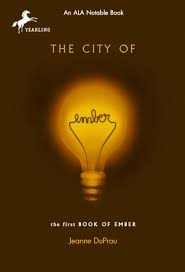
New Novel Study - City of Ember
Our new novel study will start November 28th, and it is The City of Ember.
Monday, November 15, 2010
Learning Styles, Goal Setting and Portfolios
In class you were asked to complete different questionnaires to help you determine work habits and learning.
We are exploring learning styles so that you can appreciate your strengths and talents, but also learn what areas you need to develop.
There are also many good websites on-line that can help you analyse your learning style. Here are a few:
VAK - Visual Auditory Kinethetic Questionnaire
click on start quiz....
http://homeworktips.about.com/od/homeworkhelp/a/lstyleqz.htm
Multiple Intelligences Quiz
http://literacyworks.org/mi/assessment/findyourstrengths.html
What are the M.I.'s? How can you develop this ability? See link below, explore the diagram...
http://www.familyeducation.com/topic/front/0,1156,63-12410,00.html
Subscribe to:
Posts (Atom)